
How to Prevent Sewer Backups After Heavy Rain
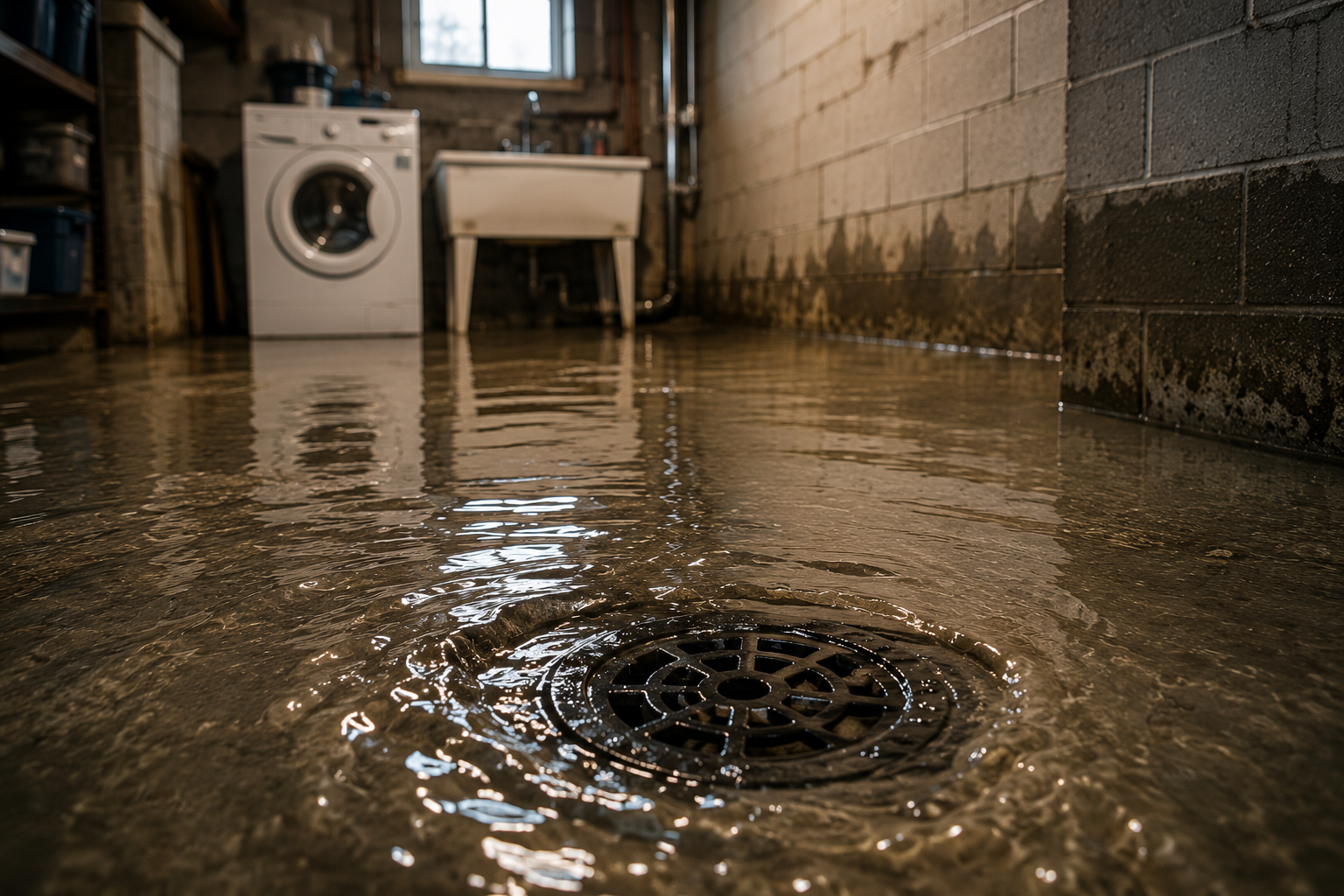
A sewer backup is one of the most unpleasant plumbing emergencies a homeowner can experience, and it almost always happens at the worst possible time. Heavy rain rolls through Montgomery County, and suddenly, contaminated water is backing up through your basement floor drain, toilet, or utility sink.
At Cooper Mechanical Services, we’ve handled sewer line backup calls across Willow Grove, Horsham, Abington, and the greater Philadelphia area for nearly a century. The good news: most sewer backups are preventable. Here’s what causes them and how to prevent sewer backups after heavy rain.
Sewer backups after heavy rain are usually caused by overwhelmed municipal systems, blockages in your sewer line, or a lack of protective plumbing like a backwater valve. A licensed plumber can inspect your line and recommend the best basement sewer backup prevention strategy for your home.
Key Takeaways
- A sewer backup after heavy rain is common in older communities
- A backwater valve is one of the most effective tools for backup prevention
- Cleanup involves contaminated water and should never be handled without precautions
- Routine sewer line inspections catch problems before they become emergencies
What Causes Sewer Backups After Heavy Rain?
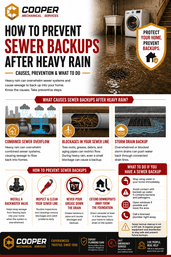
Sewer backups don’t happen randomly. There are three primary sewer backup causes we find in homes across Montgomery County, and understanding each one determines the right fix.
Combined Sewer Overflow
Many older communities in the greater Philadelphia region use combined sewer systems that handle both stormwater and sewage in the same pipe. During heavy rainfall, these systems can exceed their capacity. When that happens, the excess has to go somewhere, and it often flows backward into homes.
Blockages in Your Sewer Line
Tree roots are the leading cause of sewer line backup in residential properties. Roots naturally seek moisture and can infiltrate sewer pipes through small cracks or joint gaps, then grow until they restrict or fully block flow.
Grease buildup, flushed debris, and deteriorating pipe walls also contribute to blockages. When a partial blockage exists and heavy rain adds volume to the system, that can tip a slow drain into an overflow.
Storm Drain Backup
When storm drains in the street become overwhelmed or blocked, water pressure can push back through connected drain lines. A storm drain backup is a less common but real contributor to backups in low-lying areas or properties where the basement floor sits close to the sewer main elevation.
How to Prevent Sewer Backups
Preventing a sewer backup is less expensive than dealing with one after the fact. Here’s what works.
- Install a backwater valve
- Have your sewer line inspected and cleaned
- Never pour grease down the drain
- Extend downspouts away from the foundation
What to Do If You Have a Sewer Backup
If sewage is already backing up into your home, act quickly and carefully.
- Stop using the water in your home immediately
- Avoid contact with the backed-up water, which contains bacteria and pathogens
- Open windows if possible and leave the affected area
- Call a licensed plumber right away
Sewer backup cleanup requires protective equipment, disinfection, and an assessment of the line to prevent recurrence. This is not a situation for a mop and bucket.

FAQs
Why does my basement drain back up only when it rains heavily?
This is a classic sign of a combined sewer overflow or backed-up storm drain. During normal conditions, your line handles the load. When heavy rain overwhelms the municipal system, pressure reverses and finds the lowest exit point in your home—usually a basement floor drain. A backwater valve directly addresses this.
How do I know if tree roots are in my sewer line?
Slow drains throughout the house, gurgling sounds from multiple fixtures, and recurring clogs are all warning signs. The only way to confirm root intrusion is a camera inspection of the sewer line. Don’t wait until a backup forces the issue.
Is sewer backup cleanup something I can do myself?
We strongly advise against it. Backed-up sewage contains harmful bacteria, viruses, and pathogens. Cleanup requires protective gear, commercial-grade disinfectants, and assessment of what materials need to be removed.
How much does a backwater valve installation cost?
Costs vary depending on your home’s plumbing configuration and access to the sewer line, but installation ranges from a few hundred to around a thousand dollars. Given that a single sewer backup event can cause thousands of dollars in damage and cleanup costs, it’s one of the highest-return investments in basement sewer backup prevention available to homeowners.
Stop Sewer Backups Before They Start
If your home has experienced a sewer backup after heavy rain, or you want to get ahead of the problem before the next storm, the Cooper Mechanical Services team is ready to help.
We’ve protected homes across Willow Grove, Horsham, Lansdale, and Montgomery County since 1930. Call Cooper Mechanical Services today to schedule a sewer line inspection or discuss backwater valve installation.