
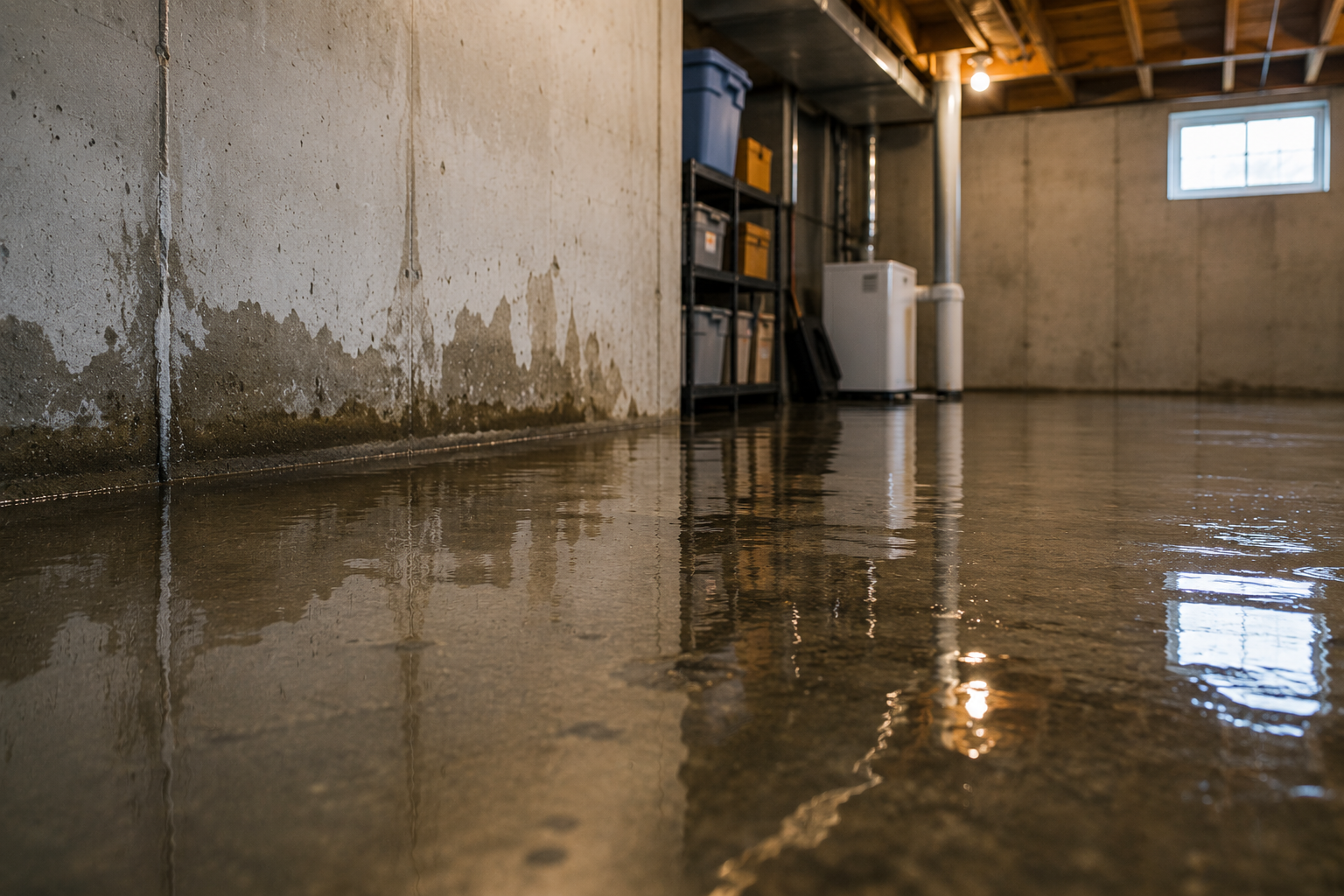
Common Basement Flooding Causes and How to Prevent Them
A flooded basement is one of the most stressful and costly problems a homeowner can face. What makes it worse is that it’s rarely random. There’s almost always an identifiable cause, and in most cases, it’s preventable.
Cooper Mechanical Services has responded to basement flooding calls across Willow Grove, Horsham, Abington, and Montgomery County for nearly a century. The same causes come up again and again. Understanding them is the first step toward keeping your basement dry.
Basement flooding is usually caused by poor drainage, foundation cracks, sump pump failure, or sewer backups. Identifying the specific source is critical, because the fix is different for each one. A licensed plumber can diagnose the underlying cause and recommend the right basement flooding prevention strategy for your home.
Key Takeaways
- Montgomery County’s clay-heavy soil and older houses make basements vulnerable to flooding
- Drain backups and sump pump failure are among the most common culprits we see
- Waterproofing alone doesn’t fix drainage or plumbing issues
- Early identification prevents structural damage, mold growth, and expensive repairs
Why Does My Basement Flood?
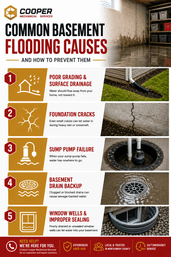
Here are the five most common basement flooding causes we find in homes throughout Willow Grove and the greater Philadelphia area.
Poor Grading and Surface Drainage
The ground around your home should slope away from the foundation. When it doesn’t, rainwater runs toward the house instead of away from it.
Water seeping into basement walls from the outside is often traced back to this problem. It’s one of the most common and most overlooked basement flooding causes in older neighborhoods.
Foundation Cracks
Concrete and block foundations develop cracks due to settling, freeze-thaw cycles, and soil pressure. Even hairline cracks allow water intrusion during heavy rain or snowmelt.
Basement water intrusion through foundation walls often starts minor and worsens with each wet season. By the time homeowners notice it, the water has worked its way in for months or longer.
Sump Pump Failure
Your sump pump is your primary defense against groundwater accumulation. When it fails, water has nowhere to go. This is a very common problem in the spring.
Basement Drain Backup
Floor drains in basements are connected to your home’s sewer or drainage system. When those lines are clogged, overwhelmed during heavy rain, or affected by a mainline blockage, water backs up through the floor drain rather than flowing out.
Drain backups in the basement are particularly unpleasant because the water is often contaminated. If water comes up through your floor drain, call a plumber immediately.
Window Wells and Improper Sealing
Basement windows set below grade collect water if the surrounding well isn’t properly drained or sealed. During heavy rainfall, these wells can fill faster than they drain and push water through the window frame and into your basement.
How to Prevent Basement Flooding
Knowing why your basement floods is only useful if it leads to action. Here are the most effective flood prevention measures we recommend for homes in the Willow Grove area.
- Regrade around your foundation
- Inspect and maintain your sump pump
- Seal foundation cracks as soon as possible
- Keep drain lines clear
- Check window well drainage

FAQs
Is water seeping into my basement a serious problem?
Yes. Even slow, intermittent seeping causes cumulative damage. Mold can begin developing within 24 to 48 hours of water intrusion. Address it as soon as it’s identified.
Does basement waterproofing fix all flooding issues?
No. Waterproofing addresses water coming through walls and floors, but it won’t resolve a failed sump pump, a sewer line backup, or poor surface drainage. A proper diagnosis determines which solution is needed.
How do I know if my basement flooding is a plumbing issue or a drainage issue?
Water coming up through a floor drain or toilet points to a plumbing or sewer issue. Water coming through walls, windows, or the floor slab during rain is typically a drainage or foundation issue. A licensed plumber can assess both and direct you to the right repair.
How often should I have my basement drainage system inspected?
For homes in Montgomery County, an annual inspection is reasonable. If you’ve experienced flooding before, or if your sump pump is aging, don’t wait for trouble to schedule an evaluation.
Protect Your Basement with Cooper Mechanical Services
If your basement has flooded, is showing signs of water intrusion, or you want to get ahead of the problem before the next heavy rain, Cooper Mechanical Services is ready to help.
We’ve served homeowners across Willow Grove, Horsham, Lansdale, and the greater Philadelphia region since 1930. We answer every call with a live person, offer 24/7 emergency plumbing service, and focus on finding the real cause of the problem.
Contact Cooper Mechanical Services today to schedule a basement plumbing inspection.