
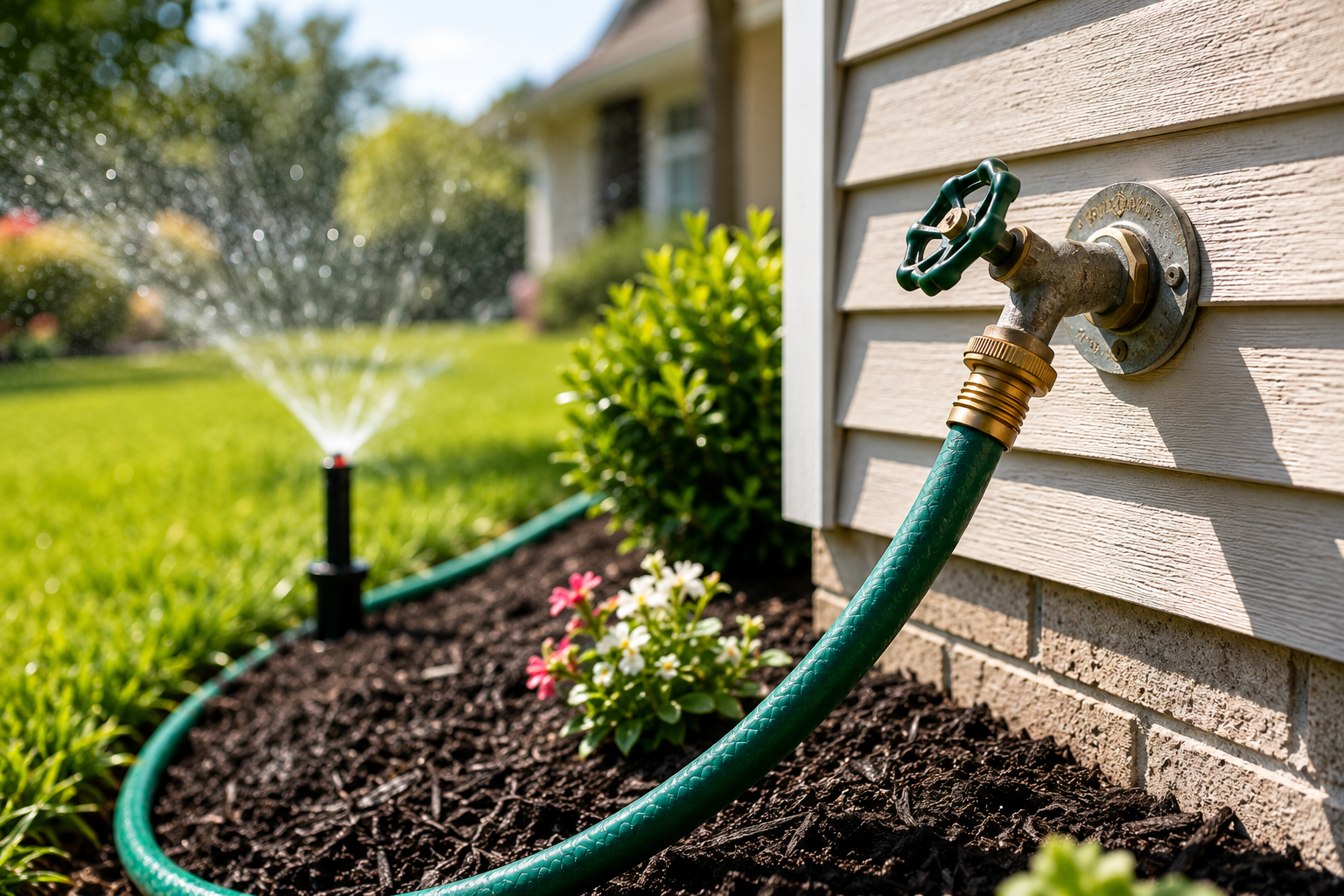
Preparing Outdoor Faucets and Irrigation Systems for Summer
Warmer weather arrives in Willow Grove, and suddenly everyone wants to wash the car, water the garden, and fire up the sprinklers—only to discover a dripping spigot, a sprinkler head that won’t pop up, or a slow leak that’s been soaking into the foundation wall all spring.
The team at Cooper Mechanical Services sees a spike in outdoor plumbing calls every year as summer approaches. Many are preventable. A little preparation now saves you from a plumbing repair you weren’t planning for.
Here’s how to get your outdoor faucets and irrigation system ready for the season the right way.
Before summer, every faucet and irrigation system in your home should be inspected, tested, and confirmed leak-free. Ignoring these problems wastes thousands of gallons of water a month and can cause foundation or landscape damage. If anything looks off, call a licensed plumber before the season gets underway.
Key Takeaways
- Winter stress causes outdoor faucet leaks and spigot damage that aren’t always visible
- Sprinkler system startup should be done gradually and inspected zone by zone
- An irrigation system inspection catches problems before they waste water all summer
- Outdoor plumbing maintenance takes less than an hour and prevents expensive repairs
- Homes with older spigots or original irrigation systems are overdue for a check
Start with Your Faucets
Your hose bibs and spigots took the brunt of winter. Even if they were properly shut off and drained in the fall, the freeze-thaw cycle puts stress on the fittings, packing washers, and connected pipe inside the wall. Spigot maintenance in spring catches damage before it becomes a problem.
How to Check Your Outdoor Faucets Before Summer
Turn on each faucet one at a time and let it run for 30 to 60 seconds. While it’s running, check for:
- Dripping from the spout after you shut it off
- Water weeping from the handle or packing nut
- Reduced pressure compared to last season
- Moisture or soft drywall near the hose bib on the interior wall
Don’t Skip Frost-Free Hose Bibs
Many homes in Willow Grove and surrounding Montgomery County communities have frost-free hose bibs, a design that keeps the shutoff point inside the wall where it’s warmer. These are excellent for freeze prevention, but they can still fail. If the faucet handle is left attached to a hose in winter, water can’t drain from the pipe properly and the internal stem may have cracked.
Faucet maintenance on frost-free models includes checking that the anti-siphon cap at the tip is intact and that the handle operates smoothly without resistance.
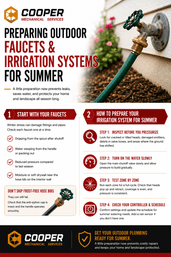
How to Prepare Your Irrigation System for Summer
Pressurizing an irrigation system too quickly after winter can blow out heads, crack manifolds, and stress valves that are already worn.
Step 1: Inspect Before You Pressurize
Before turning on a single valve, walk the irrigated area and look for:
- Sprinkler heads that are cracked, tilted, or sitting too high or low
- Drip emitters that are disconnected or damaged
- Valve boxes that have taken on debris, water, or pest activity over winter
- Any areas where the ground has shifted or settled over irrigation lines
Ten minutes here can prevent a costly surprise once the system is under pressure.
Step 2: Turn on the Water Slowly
When you’re ready to restore water to the system, open the main shutoff valve slowly. Allow pressure to build gradually. Rapid pressurization stresses components that have been dormant for months and is a leading cause of blown manifolds.
Step 3: Test Zone by Zone
Run each zone for a full cycle and observe:
- Are all heads popping up and retracting?
- Is coverage even?
- Are there areas of pooling water?
- Is water pressure consistent across the zone?
Step 4: Check Your Controller and Schedule
Confirm that your irrigation controller came through winter without losing its programming. Update the schedule for summer watering needs, since most Montgomery County lawns need more frequent, shorter cycles in July and August than in May or June. If your controller doesn’t have a rain sensor, consider adding one. It’s one of the most effective lawn irrigation tips for reducing unnecessary water use.

FAQs
How do I know if my outdoor faucet was damaged over the winter?
The most common signs are dripping after shutoff, moisture near the hose bib on the interior wall, reduced water pressure, or a handle that feels stiff or loose compared to before. If the faucet runs but the pressure is notably weak, there may be a crack or blockage.
Can I do the sprinkler system startup myself?
Homeowners can handle the basics, such as visual inspection or zone testing. Where it gets more technical is diagnosing pressure problems, repairing valve manifolds, or adjusting head placement for proper coverage. If you find issues during startup that go beyond replacing a single head, a professional inspection is worth scheduling.
How often should outdoor faucets be replaced?
A quality frost-free hose bib installed correctly can last 15 to 20 years. That said, maintenance matters. If your spigot is original to a home that’s 20 or more years old and has never been serviced, replacement is worth considering before problems develop.
Why does my sprinkler system have low pressure in some zones?
Zone-specific pressure loss usually points to a broken or partially blocked head in that zone, a leaking lateral line, or a valve that isn’t opening fully. It can also indicate that too many heads are running on a single zone for the available pressure.
Get Your Outdoor Plumbing Ready for Summer
Whether you have a dripping spigot that needs attention or want a plumbing inspection before summer begins, Cooper Mechanical Services is ready to help. We hold every job to the Cooper Standard—a level of quality that goes beyond what most contractors deliver.
Get in touch with Cooper Mechanical Services to check your outdoor plumbing before summer!