
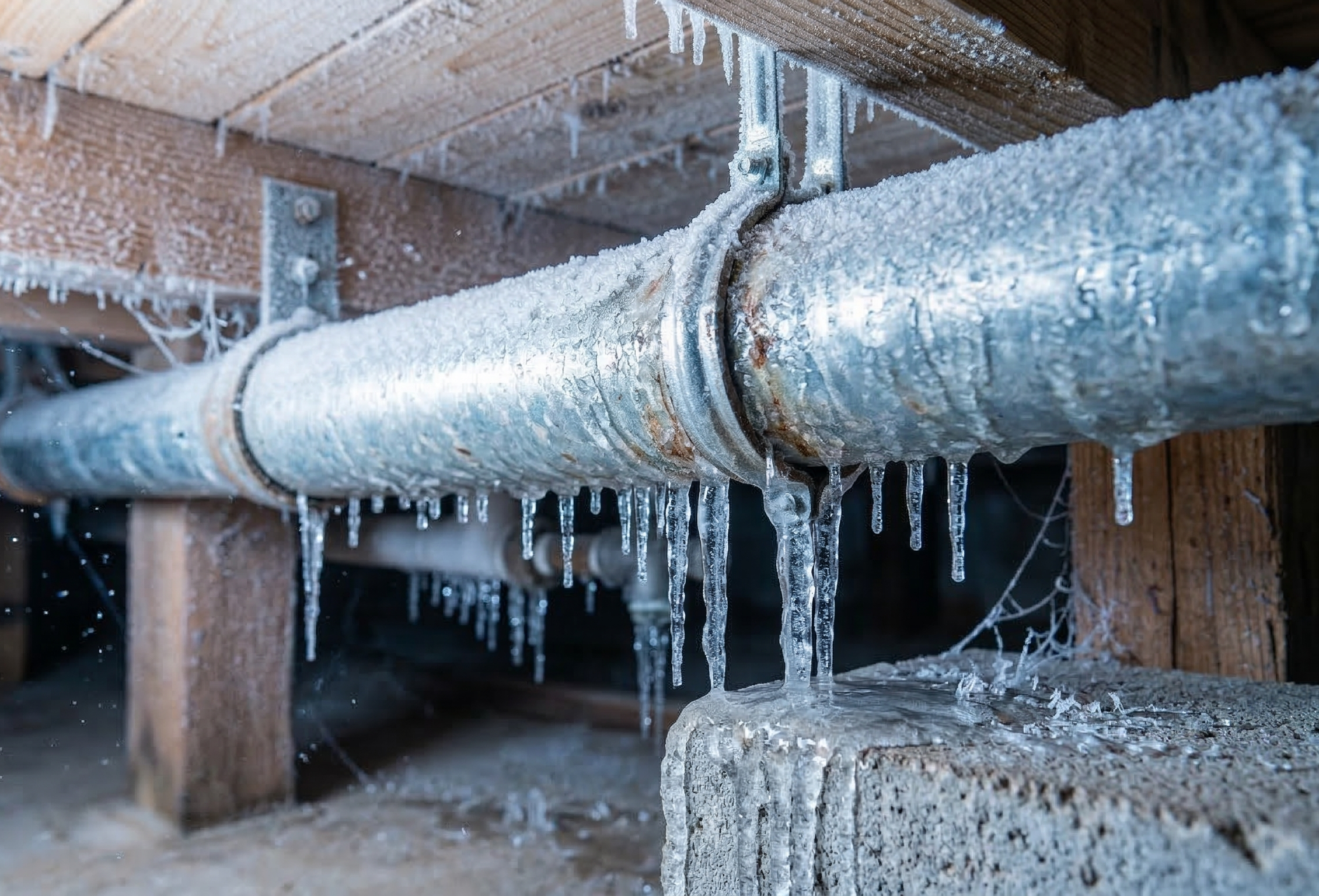
How to Prevent Frozen Sewer Lines During Freeze-Thaw Cycles
Winter in Southeastern Pennsylvania can be brutal on underground plumbing. One of the most common cold-weather problems we see at Cooper Mechanical Services is damage caused by freeze-thaw cycles.
Water inside plumbing pipes can freeze and expand during extremely cold temperatures. Once temperatures rise again, the ice melts and the pipe contracts. This constant expansion and contraction weakens the pipe walls. Eventually, the pressure may cause:
- Frozen sewer lines
- Cracked sewer pipes
- Cracked sewer line
- Burst drain pipes
Many homeowners in Montgomery County only discover the problem after wastewater stops draining properly or sewage begins backing up inside the home.
Understanding freeze-thaw damage helps homeowners catch sewer problems early.
Summary: How Freeze-Thaw Cycles Damage Sewer Lines
Freeze-thaw cycles are a major cause of underground plumbing damage in Pennsylvania winters. When water freezes inside pipes:
- Ice expands and increases pressure
- Pipe walls weaken over time
- Cracks begin forming in the pipe
- Pipes may eventually burst
Common winter plumbing issues include:
- Frozen sewer line
- Cracked sewer pipe
- Cracked sewer line
- Burst drain pipe
- Frozen pipe damage
Why Freeze-Thaw Cycles Damage Underground Sewer Lines
As water freezes, it expands by roughly 9 percent in volume. That expansion pushes outward on the pipe walls.
Repeated freezing and thawing create a cycle of stress on underground plumbing. Eventually, the constant stress can cause a cracked sewer line, burst drain pipe, or severe frozen pipe damage.
Signs of a Frozen Sewer Line
In many homes around Willow Grove, Abington, and Horsham, the first warning signs appear inside the house. Common signs of a frozen sewer line include:
- Slow drains throughout the home
- Gurgling sounds in toilets or sinks
- Water backing up into tubs or showers
- Foul sewage odors near drains
- Multiple fixtures draining slowly
We often hear from homeowners who noticed these symptoms after several days of extremely cold weather. If ignored, the pressure inside the pipe can cause a burst drain pipe or cracked sewer pipe underground.
Why Older Sewer Lines Are More Vulnerable
Not all plumbing systems react the same way to cold weather. Older homes in Montgomery County and the Philadelphia suburbs often have sewer lines made from materials like:
- Clay
- Cast iron
- Early PVC
These older sewer pipes are more likely to develop cracks during freeze-thaw cycles. During sewer inspections, it’s common for our plumbers to find cracked sewer lines in older homes where the pipe has weakened over decades of temperature changes.
Common Types of Winter Sewer Line Damage
Freeze-thaw cycles can cause several different types of plumbing failures.
Frozen Sewer Line
When wastewater freezes inside the sewer pipe, the line becomes completely blocked. This prevents wastewater from leaving the home.
Cracked Sewer Pipe
Expansion pressure can cause small fractures in underground pipes. These cracks usually grow with repeated freezing.
Burst Drain Pipe
In severe cases, the pressure from frozen water can split a pipe open and cause a complete plumbing failure.
Underground Pipe Separation
Repeated freezing and thawing can cause pipes to shift underground. This may lead to joint separation or misaligned pipes.
How Plumbers Diagnose Frozen Sewer Line Damage
When homeowners in Willow Grove experience winter drainage problems, plumbers typically begin with a sewer camera inspection.
At Cooper Mechanical Services, our technicians use specialized cameras to inspect underground sewer lines and locate:
- Frozen sections of pipe
- Cracked sewer pipes
- Collapsed or misaligned pipes
- Debris buildup caused by freezing
Once the damage is identified, plumbers determine whether sewer line repair or sewer line replacement is the safest solution. In some extreme cases, plumbing excavation may be required to access the damaged pipe.
What Happens If Frozen Sewer Line Damage Is Ignored?
Ignoring a frozen sewer line can lead to serious plumbing problems.
If pressure continues building inside the pipe, the damage can worsen rapidly. Potential consequences include:
- Sewage backing up into the home
- Severe burst drain pipe failures
- Structural damage to floors or basements
- Expensive emergency plumbing repairs
How Homeowners Can Prevent Frozen Sewer Pipes
While extreme cold can still cause problems, homeowners can reduce the risk of frozen pipes. To prevent frozen pipes, our plumbers recommend:
- Maintaining consistent indoor temperatures during winter
- Insulating exposed plumbing pipes
- Scheduling routine plumbing inspections
- Addressing slow drains before winter begins
- Keeping warm air circulating in crawlspaces and basements
FAQs
A frozen sewer line occurs when wastewater inside underground pipes freezes during extremely cold weather. This blocks drainage and increases pressure inside the pipe.
Yes. Repeated freezing and thawing create pressure that can weaken pipe walls and lead to a cracked sewer pipe or cracked sewer line.
Depending on the severity of the damage, plumbers may perform sewer line repair, remove blockages, or replace sections of pipe. Sewer line replacement may be required in severe cases.
Signs include slow drains, sewage odors, gurgling pipes, and wastewater backing up into fixtures.
Request Sewer Line Repair in Montgomery County
If you suspect a frozen sewer line, cracked sewer pipe, or burst drain pipe, it’s important to address the problem quickly.
At Cooper Mechanical Services, our plumbers provide expert sewer line repair, sewer line replacement, and plumbing excavation throughout Montgomery County and the nearby communities.
If winter weather has caused frozen pipe damage, scheduling an inspection early can prevent serious plumbing emergencies. Contact Cooper Mechanical Services to diagnose sewer line problems and restore drainage to your home!