
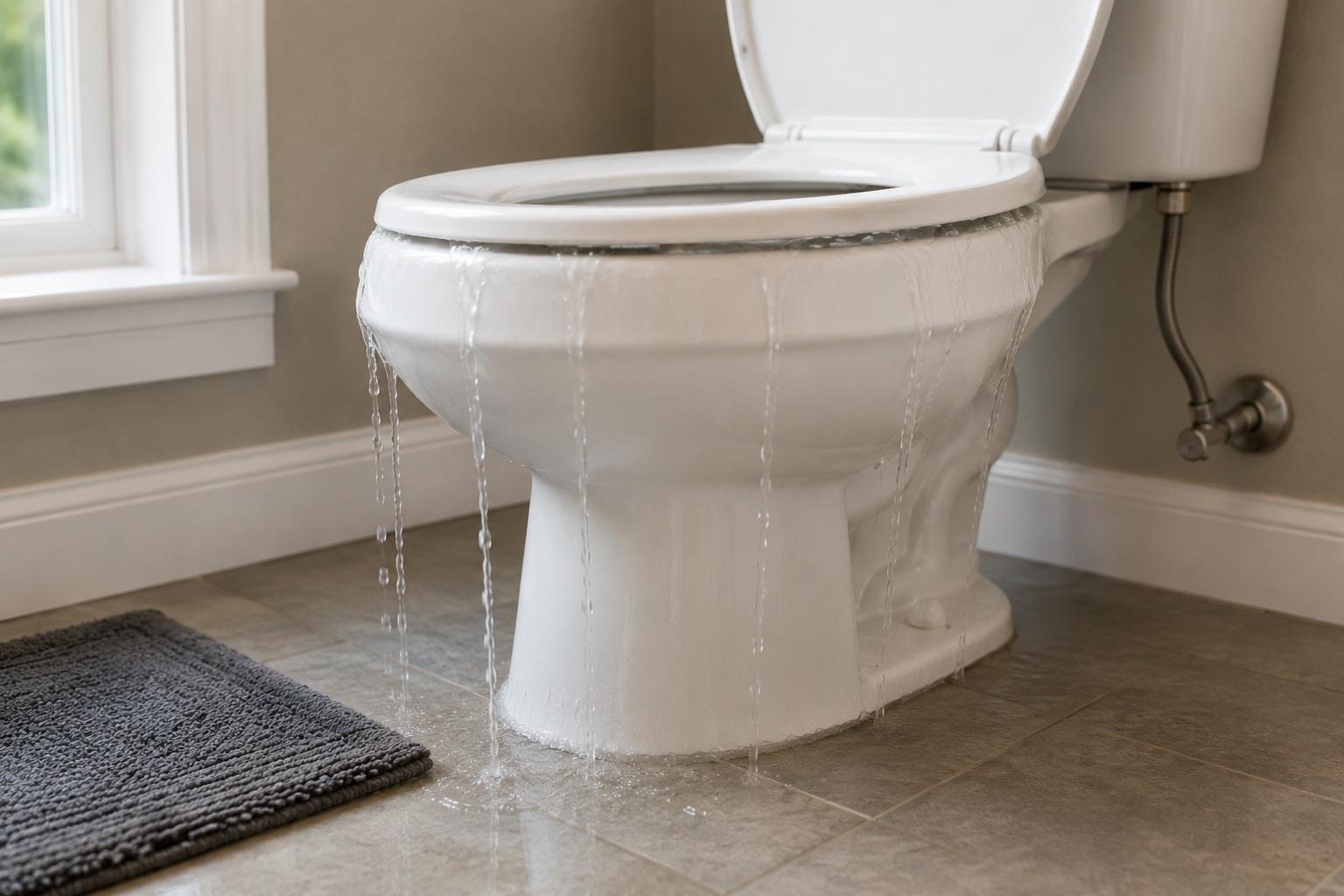
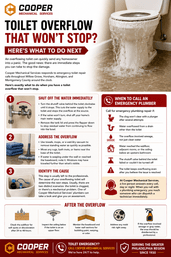
Toilet Overflow That Won’t Stop? Here’s What to Do Next
An overflowing toilet can quickly send any homeowner into a panic. The good news: there are immediate steps you can take to stop the damage.
Cooper Mechanical Services responds to emergency toilet repair calls throughout Willow Grove, Horsham, Abington, and Montgomery County around the clock. Here’s exactly what to do when you have a toilet overflow that won’t stop.
TL;DR
If your toilet is overflowing, shut off the water at the base of the toilet. If that doesn’t work, cut the water supply at the main shutoff. Most overflows are caused by a clog, a stuck toilet float valve, or a fill valve failure. Don’t wait to call an emergency plumber if water is spreading onto floors or adjacent rooms.
Key Takeaways
- Acting in the first 60 seconds limits water damage
- The shutoff valve behind the toilet is your fastest fix when a toilet won’t stop running
- Overflows from clogs and overflows from mechanical failure require different responses
Step 1: Shut Off the Water Immediately
The moment the toilet starts overflowing, find the shutoff valve—the oval or football-shaped knob located at the wall behind the base of the toilet. Turn it clockwise until it stops. This cuts the water supply to the toilet and stops the overflow at the source.
If the valve is corroded, seized, or won’t turn, go to the main water shutoff and cut the supply to the entire house. It’s a drastic step, but stopping the water is critical.
Once the water is off, remove the tank lid and check the flapper. If it’s not seated properly over the drain opening at the bottom of the tank, press it down. This prevents residual water in the tank from continuing to flow into the bowl.
Step 2: Address the Overflow
With the water supply cut, focus on containing the water already on the floor. Use towels, mops, or a wet/dry vacuum to remove standing water as quickly as possible.
Move any rugs, bath mats, or items stored near the base of the toilet. If water has reached the baseboard or appears to be seeping under the wall, note that. That’s a sign moisture has traveled further than what’s visible and needs to be addressed.
Step 3: Identify the Cause
This step is usually left to the professionals. The cause of your overflowing toilet will determine the next steps. There are two distinct scenarios: the toilet is clogged, or there’s a mechanical problem.
When to Call an Emergency Plumber
Some toilet overflow situations are straightforward. Others warrant a plumber. Call for emergency plumbing repair if:
- The clog won’t clear with a plunger after several attempts
- Water overflowed from a drain other than the toilet
- The overflow involved sewage, not just clean water
- Water reached the subfloor, adjacent rooms, or the ceiling below an upstairs bathroom
- The shutoff valve behind the toilet failed or couldn’t be turned off
- The toilet keeps overflowing even after you believe the issue is resolved
At Cooper Mechanical Services, a live person answers every call, day or night. We don’t use answering services or after-hours voicemail. When you call with a plumbing emergency, you reach someone who can dispatch a technician immediately.
After the Overflow
Once the immediate crisis is handled, the work isn’t done. Water damage is deceptive, and what looks dry on the surface can be saturated underneath.
- Check the subfloor for soft spots or discoloration after 24 to 48 hours
- Inspect the ceiling below if the toilet is on an upper floor
- Monitor the baseboard and lower wall sections for bubbling paint, warping, or odor
- Address any mold risk right away
If the overflow involved sewage or gray water, the area should be disinfected by a professional.

FAQs
How do I stop a toilet from overflowing?
Turn the shutoff valve clockwise at the base of the toilet wall to cut the water supply. If the valve won’t turn, shut off the home’s main water supply. Remove the tank lid and press the flapper down manually to stop residual tank water from entering the bowl.
Why does my toilet overflow even when it’s not clogged?
A toilet that overflows without an obvious clog is almost always a mechanical issue inside the tank. The most common cause is a faulty or stuck toilet float valve that fails to signal the fill valve to stop running. A fill valve set too high or a worn flapper can also cause continuous water flow that overwhelms the bowl.
Is an overflowing toilet considered a plumbing emergency?
It depends on the scope. A single overflow from a clog that clears with a plunger is manageable. An overflow that won’t stop, involves sewage, or has spread to other areas of the home demands emergency service.
How much does emergency toilet repair cost?
Cost varies depending on the cause and the time of the service call. A straightforward float valve or fill valve replacement is one of the more affordable plumbing repairs. A main line blockage, subfloor water damage, or a failed shutoff valve that requires pipe work will cost more. At Cooper Mechanical Services, we provide a detailed estimate before any work begins.
Toilet Emergency? Call Cooper Mechanical Services
If your toilet won’t stop overflowing, the cause isn’t clear, or water has already spread beyond the bathroom, don’t wait.
Cooper Mechanical Services has provided plumbing services to homeowners across the greater Philadelphia region since 1930. Call now for immediate assistance with your overflowing toilet.